Introduction
Choosing home internet should feel simple, but it rarely does. Between fiber, 5G, speed numbers, discounts, and small-print offers, even a basic plan comparison can turn into a headache.
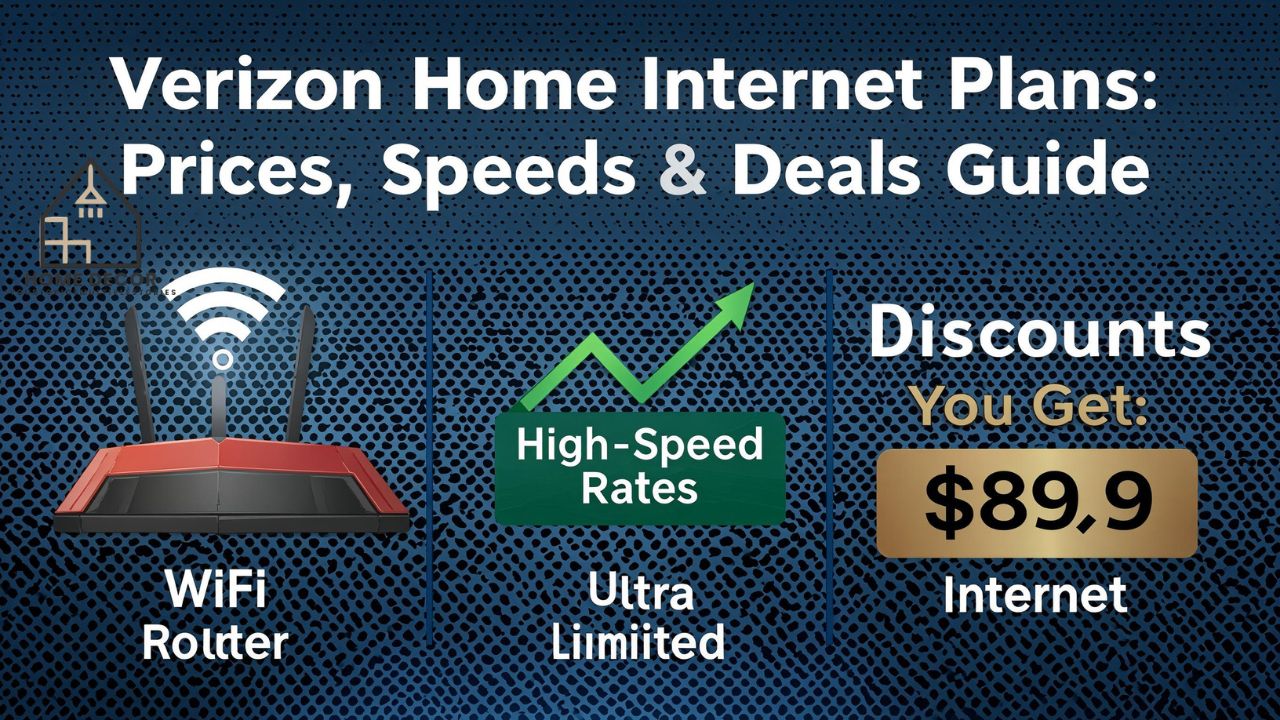
That is why understanding verizon home internet plans matters before you sign up. Verizon offers fiber internet through Fios in select areas and wireless home internet through its 5G network, so the best option depends heavily on your address, household size, and how you use the internet.
For many homes, the right plan is not always the fastest one. A couple who streams Netflix and checks email may be fine with a lower tier, while a busy household with gamers, remote workers, and smart devices may need stronger upload speeds, lower lag, or whole-home WiFi.
This guide breaks everything down in plain English, so you can compare speed, price, reliability, perks, and real-life use before choosing.
What Are Verizon Home Internet Plans?
Verizon home internet plans are residential broadband options offered by Verizon for households that need internet for streaming, work, gaming, browsing, smart devices, and video calls.
Verizon’s main home internet services include:
| Internet Type | Best For | Connection Type |
|---|---|---|
| Verizon Fios | Fast uploads, gaming, heavy streaming | Fiber optic |
| Verizon 5G Home Internet | Easy setup, cable-free internet | 5G wireless |
| Verizon Home Internet Lite | Light use in limited-service areas | 5G/4G LTE wireless |
| Verizon says Fios uses a 100% fiber-optic network and offers nearly symmetrical upload and download speeds on most plans, which is useful for video calls, cloud backups, gaming, and remote work. | ||
| Verizon 5G Home Internet works differently. Instead of a fiber line running into your home, it uses Verizon’s 5G Ultra Wideband network and a home gateway device that acts as both modem and router. | ||
Verizon Fios vs Verizon 5G Home Internet
The biggest difference is how the internet reaches your home.
Verizon Fios
Verizon Fios is usually the stronger choice when available. It uses fiber-optic lines, which can deliver fast speeds, low lag, and strong upload performance. Verizon lists Fios speed tiers from 300 Mbps up to 2 Gig, depending on location and availability.
Fios is a good fit for:
- Remote workers
- Gamers
- Large families
- Homes with many connected devices
- People who upload videos, files, or backups often
Verizon 5G Home Internet
Verizon 5G Home Internet is a wireless broadband option. It can be easier to install because many homes use a plug-and-play gateway rather than a traditional cable or fiber installation.
Verizon lists 5G Home, 5G Home Plus, and 5G Home Ultimate as its main 5G home tiers, with higher tiers offering stronger speed potential, longer price-lock guarantees, and more features.
This can be a smart fit for:
- Renters
- Apartments
- Homes without Fios access
- People who want simple setup
- Light to moderate streamers
- Users who already have Verizon mobile service
Verizon Home Internet Plans and Speeds
Speed matters, but it should match your actual lifestyle. Paying for more speed than you need can waste money. Choosing too little speed can make every video call and movie night frustrating.
Verizon Fios Speed Options
Verizon lists these Fios speed tiers:
| Fios Plan | Advertised Speed | Best Use |
|---|---|---|
| Fios 300 Mbps | Up to 300 Mbps download/upload | Small to average households |
| Fios 500 Mbps | Up to 500 Mbps download/upload | Work, streaming, gaming |
| Fios 1 Gig | Up to 940 Mbps download, up to 880 Mbps upload | Heavy users and large homes |
| Fios 2 Gig | Average wired speeds from 1.5 Gbps to 2.3 Gbps | Power users and advanced homes |
| Verizon says Fios 300 Mbps is often enough for an average household using streaming, gaming, and video calls across multiple devices. |
Verizon 5G Home Internet Speeds
Verizon’s 5G speeds can vary by address and signal type.
| 5G Plan | Speed Notes | Best Use |
|---|---|---|
| 5G Home | Up to 100 Mbps on mid-band; some areas higher | Basic streaming and browsing |
| 5G Home Plus | Up to 150 Mbps on mid-band; higher in mmWave areas | More active homes |
| 5G Home Ultimate | Up to 300 Mbps on mid-band; up to 1 Gig in some mmWave areas | 4K streaming and heavier use |
| Verizon’s important plan information says 5G Home typical download speeds can range from 25–85 Mbps on mid-band, while 5G Home Ultimate can reach typical downloads of 300–1000 Mbps in some high-band/mmWave areas. | ||
| In real life, this means your neighbor’s experience may not match yours. Signal strength, tower distance, building materials, and local network demand can all affect wireless home internet. |
How Much Do Verizon Home Internet Plans Cost?
Pricing changes by location, discounts, plan type, and promotions. Verizon states that Fios internet starts at $34.99/month with Auto Pay and a qualifying Verizon mobile plan, and that a setup charge may apply.
For 5G Home Internet, Verizon says plans start at $35/month, with no annual contracts, no hidden fees, and a router included at no extra charge while you keep the plan.
Common ways to save include:
- Auto Pay discount
- Mobile + Home discount
- Teacher discount
- Military discount
- Nurse discount
- First responder discount
- Student discount
- Verizon Forward for eligible households
Verizon also says qualifying customers may receive reduced-cost internet through Verizon Forward if they meet eligibility rules tied to programs such as Lifeline, SNAP, WIC, or Federal Pell Grant status.
Price Comparison Table
| Option | Starting Price Mentioned by Verizon | Contract |
|---|---|---|
| Verizon Fios | From $34.99/month with qualifying discounts | No annual contract |
| Verizon 5G Home Internet | From $35/month | No annual contract |
| Verizon Home Internet Lite | Varies by eligibility/location | No annual contract |
| Always check your address on Verizon’s site before making a final decision. The plan name, speed, and deal you see can change based on availability. |
Which Verizon Plan Is Best for Your Home?
The best plan is the one that fits your daily internet habits without making you overpay.
Best for Small Homes
If you live alone or with one other person, Fios 300 Mbps or basic 5G Home may be enough. You can stream, browse, shop online, attend video calls, and use a few smart devices without needing the highest tier.
Best for Families
For families with multiple phones, TVs, tablets, and laptops, Fios 500 Mbps or 5G Home Plus may feel smoother. This is especially true when one person is working, another is watching 4K video, and someone else is gaming.
Best for Gamers
Fios is usually the better choice when available because fiber often provides lower latency and more stable wired performance. Wireless 5G can work well, but serious gamers may prefer fiber if they care about ping and consistency.
Best for Remote Workers
Remote workers should pay attention to upload speed, not just download speed. Fios is strong here because most plans have nearly symmetrical upload and download speeds. That helps with Zoom calls, file sharing, cloud software, and backups.
Best for Renters
Verizon 5G Home Internet can be appealing for renters because setup is often easier. There may be no need for drilling, cable appointments, or long installation windows. You simply place the gateway where the signal is strongest and connect your devices.
Best for Light Users
Verizon Home Internet Lite is intended for households with light internet use or areas where service is limited. Verizon says speeds are reduced after certain monthly data usage thresholds, so it is not ideal for heavy streaming or large households.
Verizon Home Internet Features and Perks
Verizon internet plans are not just about speed. The extras can matter too.
No Annual Contracts
Verizon states that its home internet plans come with no annual contracts. That gives customers more flexibility than traditional long-term cable contracts.
Router Included
Verizon says routers are included with Fios and 5G Home Internet plans at no extra rental cost while you keep service.
Price-Lock Guarantees
Price-lock length varies by plan. Verizon lists 3-year, 4-year, and 5-year price-lock guarantees across 5G Home tiers, while Fios also promotes price-lock benefits for qualifying plans.
Early Termination Fee Credit
Verizon says 5G Home Internet includes a credit of up to $500 to help cover early termination fees when switching from another provider.
Whole-Home WiFi
Some higher-tier plans include or support whole-home WiFi features, including extenders. This can help larger homes, thick walls, upstairs rooms, or dead zones.
Pros and Cons of Verizon Internet
Pros
- Fios offers strong upload and download speeds
- 5G Home can be easy to install
- No annual contracts on many home internet plans
- Router included on eligible plans
- Discounts for mobile customers and qualified groups
- Price-lock guarantees on many plans
- Fios is strong for gaming, remote work, and large households
Cons
- Fios is not available everywhere
- 5G speeds can vary by location and signal
- Best prices may require Auto Pay or mobile bundling
- Home Internet Lite is not ideal for heavy use
- Promotions and perks can change often
How to Check Verizon Availability
Before comparing too deeply, check your address. This step matters because Verizon may offer Fios at one home, 5G Home at another, and only Lite service somewhere else.
To check availability:
- Visit Verizon’s home internet page.
- Enter your street address.
- Review the plans shown for that exact location.
- Compare the final monthly price after discounts.
- Check whether installation is self-setup or professional setup.
- Read the price-lock, equipment, and promotional terms.
This is especially important for <strong>verizon home internet plans</strong> because availability is location-based. Two people in the same city can see different options.
Tips Before You Sign Up
Look Beyond Download Speed
Download speed gets the attention, but upload speed affects video calls, file sharing, cloud storage, and livestreaming. If you work from home, upload speed matters more than many people realize.
Count Your Devices
A modern home can easily have 20+ connected devices: phones, TVs, laptops, tablets, cameras, speakers, thermostats, watches, and gaming consoles. Choose a plan that can handle your real device count.
Think About WiFi Coverage
A fast plan will still feel slow if your router is in a bad spot. Place the router in a central, open area. Avoid hiding it behind a TV, inside a cabinet, or near thick walls.
Compare the Final Price
The advertised price may assume Auto Pay, paperless billing, mobile bundling, or other discounts. Before signing up, compare the final monthly bill, not just the headline price.
Check Streaming Needs
If you stream mostly HD video, a lower plan may be fine. If your household streams 4K on several TVs, choose more bandwidth.
Read Promo Terms
Gift cards, free devices, or bonus perks can be attractive. Still, read the terms carefully. Some offers require keeping service active for a certain period.
Verizon Home Internet Plans Compared With Cable
Cable internet can be fast, but many cable plans have slower uploads than fiber. Verizon Fios has an advantage because fiber supports stronger upload performance on most plans.
5G Home Internet competes differently. It is not trying to be fiber in every home. It is a cable-free option that can be convenient where setup, flexibility, and price matter.
Choose Fios if you want stability and it is available. Choose 5G Home if you want simple setup and your address gets strong Verizon 5G coverage.
Common Mistakes to Avoid
Picking the Cheapest Plan Without Checking Usage
Cheap is good only when the plan fits your life. A low-cost plan that buffers every evening is not really saving you money.
Ignoring Upload Speed
This is a common mistake. Upload speed matters for creators, remote workers, online students, and gamers.
Assuming 5G Home Works the Same Everywhere
Wireless home internet depends on signal quality. Always check availability and test the service early if a money-back guarantee applies.
Forgetting About Router Placement
A poor router location can make a good plan feel bad. Test a few spots if your WiFi feels weak.
FAQs
What are the main Verizon home internet plans?
The main options are Verizon Fios, Verizon 5G Home Internet, and Verizon Home Internet Lite. Fios uses fiber, 5G Home uses Verizon’s wireless network, and Lite is designed for lighter use in limited-service areas.
Are verizon home internet plans available everywhere?
No. Availability depends on your exact address. Fios is limited to certain areas, while 5G Home depends on Verizon’s wireless coverage and capacity.
Is Verizon Fios better than 5G Home Internet?
Fios is usually better for speed consistency, upload performance, gaming, and heavy use. 5G Home can still be a strong option when Fios is unavailable or when you want easier setup.
Do Verizon home internet plans require a contract?
Verizon states that many home internet plans come with no annual contracts. Always review the final order terms before signing up.
Is the router included?
Verizon says routers are included at no extra rental cost with eligible Fios and 5G Home Internet plans while you keep service.
Which Verizon internet plan is best for gaming?
Fios is usually the best Verizon option for gaming when available because fiber offers strong speed and low lag. 5G Home may work well too, depending on signal quality.
Can I get Verizon internet without Verizon mobile?
Yes. Verizon says a mobile plan is not required for 5G Home Internet, though bundling mobile and home internet may unlock discounts.
What is Verizon Home Internet Lite?
It is a lighter-use home internet option for areas with limited service. Verizon says speeds may reduce after 150 GB or 200 GB of monthly data usage, depending on the Lite plan.
How do I choose between Verizon Fios and 5G Home?
Choose Fios if it is available and you want the strongest speed stability. Choose 5G Home if you want wireless setup, simple installation, or Fios is not offered at your address.
Conclusion
Verizon gives households several ways to get online, but the right choice depends on where you live and how your family uses the internet. Fios is the stronger pick for speed, uploads, gaming, and work-from-home reliability. 5G Home Internet is a flexible option for people who want simple setup and solid wireless broadband. Lite is better for lighter use where other options are limited.
Before choosing, check your address, compare the real monthly price, review the speed tier, and think about your daily habits. The best plan is not always the biggest one. It is the one that keeps your home connected without stress, buffering, or wasted money.