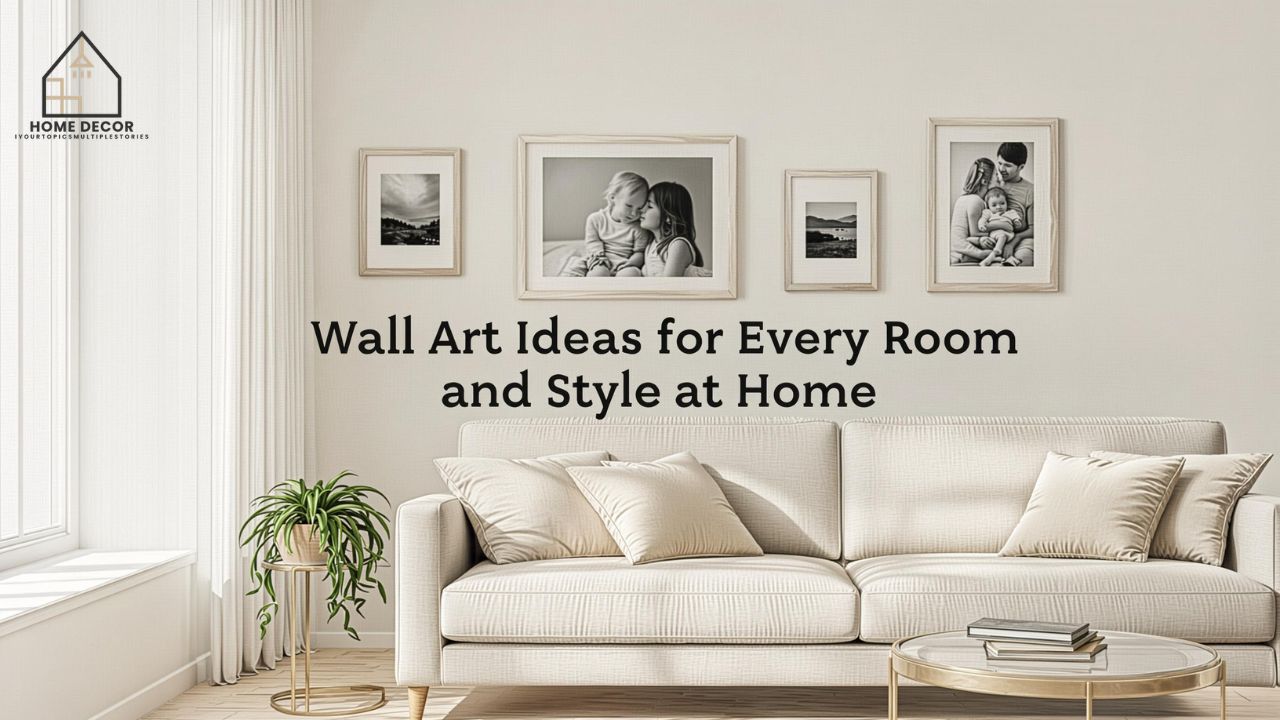
Your walls say a lot before you ever speak. A blank wall can feel cold, unfinished, even a little confusing. The right design choice can change that in minutes, and that is why wall art ideas matter more than many people think.
A well-decorated wall does more than fill space. It adds warmth, reflects personality, and helps a room feel complete. Whether you love modern interiors, cozy family spaces, or a look that feels collected over time, the right art can pull everything together without a full renovation.
Some people assume decorating walls is expensive or complicated. In reality, it can be simple. A single oversized print, a row of framed travel photos, a textile hanging, or even a thoughtful shelf display can give a room real character. You do not need a design degree. You just need a clear direction and a few smart choices.
This guide walks through practical, stylish, and realistic ways to decorate your walls. You will find ideas for every room, budget, and taste, plus tips on sizing, layout, color matching, and mistakes to avoid.
Why wall art matters in home design
Wall decor is often the finishing layer that makes a room feel intentional. Furniture gives a room function, lighting gives it mood, but art gives it personality. Without that layer, even expensive spaces can look flat.
Art also helps create visual balance. If a sofa, bed, or dining table feels heavy on one side of a room, artwork above it can anchor the layout. Designers often use artwork to guide the eye, soften sharp edges, or bring together colors that already exist in textiles, rugs, and accessories.
There is also an emotional side to it. A room decorated with meaningful pieces feels more personal than one filled only with trend-based items. Family photos, handmade pieces, local prints, children’s drawings, vintage posters, and travel finds all tell a story. That story is what makes a home memorable.
A 2023 Houzz decorating trends report showed that homeowners continue to invest in personalized interior updates rather than purely cosmetic trends. That makes sense. People want homes that feel like their own, not copied from a catalog.
How to choose the right wall art for your space
Start with the room’s purpose
Before buying anything, ask one simple question: what should this room feel like?
A bedroom usually needs calm, softness, and comfort. A home office may need focus and energy. A dining room can handle bold choices because people spend shorter periods there. Once you know the mood, choosing art becomes easier.
For example:
- Soft landscapes and abstract neutrals work well in bedrooms
- Graphic prints and typography can suit offices
- Colorful food art, vintage signs, or still-life pieces fit kitchens
- Large statement canvases often work in living rooms
Consider scale before style
One of the biggest mistakes people make is choosing art that is too small. A tiny frame floating above a large sofa almost always looks lost.
A good rule is that art above furniture should cover about two-thirds to three-quarters of the furniture width. So if your sofa is 84 inches wide, aim for art or a grouped arrangement that spans around 56 to 63 inches.
Here is a simple guide:
| Furniture Piece | Ideal Art Width |
|---|---|
| Console table 48 in | 32–36 in |
| Queen bed 60 in | 40–45 in |
| Sofa 84 in | 56–63 in |
| Dining sideboard 72 in | 48–54 in |
Size creates impact faster than color or frame choice. Even simple art looks stylish when the scale is right.
Match the color story, not every color
Your artwork does not need to match every pillow or curtain. That often looks forced. Instead, repeat one or two colors already present in the room.
If your room is mostly beige and wood tones, art with black accents can add contrast. If your room already has green in plants and textiles, art with soft green notes will feel connected. That said, contrast can be powerful too. A bright blue abstract piece in a neutral room can become the focal point.
Think about texture, not only prints
When people hear art, they often think only of framed pictures. But walls can carry texture too. Woven baskets, macramé, mirrors, sconces, wooden panels, plates, sculptural pieces, and fabric hangings all count.
Texture matters especially in neutral spaces. A room with white walls and soft furniture can feel richer with a woven wall hanging or carved wooden panel than with another flat print.
Wall art ideas for the living room
The living room is usually where people try their boldest decorating moves. It is also the room where art has the most visual power.
Oversized statement art
If you want one simple solution, go large. A single oversized piece above the sofa can look clean, confident, and expensive. This works especially well in modern, minimalist, or contemporary homes.
Choose:
- Abstract art for a modern feel
- Landscapes for a calm and airy look
- Black-and-white photography for a timeless effect
- Textured canvas art for warmth
Large pieces reduce clutter because one strong item does the work of several smaller ones.
A balanced gallery wall
A gallery wall is one of the most flexible wall art ideas because it can be formal or playful. You can mix family photos, prints, line drawings, travel pieces, and even small objects.
For a polished look:
- Keep spacing consistent, usually 2 to 3 inches apart
- Repeat one frame color for unity
- Lay the arrangement on the floor first
- Start from the center and work outward
A gallery wall works well above a sofa, sideboard, or fireplace. It can also make a large blank wall feel lived in.
Leaned art on shelves or mantels
Not every piece has to be hung. Leaning layered frames on a floating shelf or mantel gives a relaxed and collected look. This is especially useful for renters who want fewer nail holes.
Mix heights and shapes. Pair a taller frame with a smaller object such as a candle, ceramic vase, or plant. The combination feels casual but styled.
Mirror and art pairing
In small or darker living rooms, pair art with a mirror. Mirrors reflect light and help the room feel bigger. A round mirror next to a vertical print or a mirror above a console with art on either side can create strong balance.
Wall art ideas for the bedroom
Bedroom walls should usually feel softer and more restful than living room walls. The goal is comfort, not chaos.
Art above the bed
The wall above the bed is often the bedroom’s main focal point. A single wide artwork, a diptych, or a soft gallery set works beautifully here.
Great choices include:
- Abstract pieces in muted colors
- Botanical prints
- Nature photography
- Minimal line art
- Textile hangings for softness
Avoid anything too visually loud if you want a calm atmosphere. Sharp reds, intense text, or overly busy patterns may feel distracting in a sleep space.
Personal photo collections
Bedrooms are one of the best places for intimate and meaningful decor. Black-and-white photos, framed letters, wedding images, or travel memories can make the space feel deeply personal.
To keep it elevated, use matching frames and a limited color palette. A personal collection looks better when it has some visual discipline.
Symmetry for a calm look
Symmetry brings order. Matching framed prints above bedside tables or a centered artwork above the bed creates a peaceful rhythm. If your bedroom already has many textures, such as patterned bedding and curtains, symmetrical art can keep things from feeling messy.
Soft materials as art
Fabric panels, woven wall hangings, quilt displays, and padded art pieces are excellent wall art ideas for bedrooms because they add softness both visually and physically. They also work well in bohemian, rustic, and Scandinavian-inspired interiors.
Wall art ideas for the dining room and kitchen
These spaces are often ignored, yet they offer some of the easiest decorating opportunities in the home.
Food and still-life art
Classic but effective. Vintage fruit studies, modern food illustrations, coffee-themed prints, and still-life paintings feel right at home in dining areas and kitchens.
They do not have to be literal. Even abstract art in warm tones can suit a dining room because it adds energy and conversation.
Floating shelves with layered decor
In kitchens, floating shelves can act as wall art. Layer framed mini prints with cutting boards, ceramics, recipe cards, or small plants. This works especially well in breakfast nooks and open shelving areas.
Plate walls and decorative collections
A plate wall can look traditional, modern, or eclectic depending on what you choose. Handmade ceramic plates, vintage floral sets, or monochrome pieces arranged in a neat grid can create a striking feature.
It is a smart choice when you want something different from standard framed art.
Chalkboards, menus, and typography
Typography can work beautifully in kitchens and dining rooms when used sparingly. A framed recipe, a handwritten menu board, or a meaningful phrase can add charm. Still, too many quote signs can feel repetitive. One thoughtful piece is often enough.
Wall art ideas for entryways, hallways, and stairs
These transition areas deserve more attention. They shape first impressions and can make a home feel complete from the moment someone walks in.
Entryway statement piece
A bold piece in the entry sets the tone for the entire home. It could be a colorful abstract print, a mirror with sculptural detail, or a simple black-and-white photograph.
Since entryways are often small, choose art that feels welcoming without making the space crowded.
Long hallway series
Hallways are perfect for repetition. A row of matching frames can make a narrow space feel intentional. Use:
- Travel photography
- Botanical sketches
- Portrait drawings
- Family photos in black-and-white
- Vintage postcards or maps
Consistency matters here. Same-size frames help the arrangement feel clean and calm.
Staircase gallery wall
Stair walls can be tricky, but they offer huge visual payoff. Follow the angle of the stairs with your frame arrangement. Keep the center line consistent and use paper templates before hanging.
A staircase gallery wall is one of those wall art ideas that instantly makes a home feel layered and lived in.
Wall art ideas for home offices and workspaces
A workspace should support concentration, but it should not feel cold.
Motivating but tasteful prints
Choose art that energizes without overwhelming. Architectural sketches, abstract lines, muted landscapes, and focused typography can all work well.
Instead of cliché motivational posters, use pieces that genuinely inspire you. That could be a framed map of a dream destination, a photo from an achievement, or a print by an artist you admire.
Functional art
In a home office, art can also serve a purpose:
- Pinboards wrapped in linen
- Acrylic calendars
- cork walls with organized inspiration
- framed whiteboards
- pegboards styled with attractive tools
This blend of beauty and function is ideal for small workspaces.
Creative zones for different work types
If your office doubles as a creative studio, divide the walls by function. One wall can hold clean and minimal art near the desk. Another can hold more expressive mood boards or rotating inspiration. That keeps the room from feeling visually confused.
DIY and budget-friendly wall decorating ideas
Not every stylish room depends on expensive originals. Some of the best wall art ideas come from creativity, not budget.
Frame what you already have
Look around your home before you shop. Scarves, postcards, wallpaper samples, children’s artwork, magazine covers, fabric remnants, handwritten notes, and old maps can all become art.
Framing instantly gives ordinary objects more presence.
Create painted canvases
You do not need to be a trained artist to make something beautiful. Simple abstract paintings in neutral or earthy tones can look surprisingly high-end. Use large canvases, broad shapes, and a limited color palette.
Imperfection often gives handmade art its charm.
Printable art and digital downloads
Printable art is one of the easiest low-cost decorating solutions. Buy a digital file once, print it in your preferred size, and frame it to suit your space. This works especially well for seasonal refreshes.
The secret is to print at good quality and use frames that do not look flimsy.
Wall baskets, hats, and woven pieces
These are affordable, textured, and visually warm. Group them in clusters with varied sizes but similar tones. They suit boho, natural, coastal, and rustic interiors especially well.
DIY wall ledges
A simple picture ledge lets you rotate art without rehanging everything. This is ideal if you like changing decor often or want a flexible arrangement in a rental home.
How to build a gallery wall that looks polished
Gallery walls are popular for a reason. They let you combine different pieces while still creating one cohesive feature.
Choose a clear structure
There are several approaches:
- Grid layout for a formal and clean look
- Organic layout for a relaxed and collected feel
- Linear layout for hallways and stairs
- Centered cluster for smaller wall zones
A grid is easier when all frames are similar. An organic layout works better for mixed sizes and styles.
Unify with one repeated element
A gallery wall feels polished when something repeats. That could be:
- the same frame color
- a shared color palette
- all black-and-white images
- similar matting
- related subject matter
Too much variety without a common thread often feels chaotic.
Test before hanging
Use kraft paper, newspaper, or painter’s tape to map the arrangement. This saves time and prevents unnecessary wall damage. Step back often. A layout that looks right up close can feel unbalanced from across the room.
Keep the center at eye level
In most rooms, the center of the arrangement should sit around 57 to 60 inches from the floor. This common design guideline helps artwork feel naturally placed rather than too high.
Common wall art mistakes to avoid
Even beautiful pieces can look wrong if they are placed poorly. These are the mistakes that show up most often.
Hanging art too high
This is probably the most common error. Artwork should connect visually to furniture, not float near the ceiling. If a piece is above a sofa, keep the bottom edge roughly 6 to 10 inches above the back of the sofa.
Choosing art that is too small
Tiny pieces on large walls rarely feel intentional unless they are part of a broader arrangement. When in doubt, go larger or group smaller pieces together.
Ignoring the room’s mood
Bright, loud, playful art can be fun, but it may not suit every room. Think about energy level. A peaceful reading nook needs something different from a lively breakfast area.
Using too many styles at once
Mixing styles can work, but there should still be some logic behind it. If every wall has a different mood, the home can feel visually restless. Try to repeat at least one element across rooms, such as frame finish, color family, or subject tone.
Decorating every wall
Not every wall needs art. Negative space is part of good design. Empty space allows your chosen pieces to breathe and feel more important.
FAQ
What are the best wall art ideas for small spaces?
The best choices for small spaces are mirrors, vertical prints, narrow gallery walls, floating shelves, and light-toned artwork. These help a room feel open without creating clutter.
How high should I hang wall art?
A good rule is to place the center of the artwork around 57 to 60 inches from the floor. Above furniture, keep the bottom edge about 6 to 10 inches above the piece below it.
Can I mix different frame colors in one gallery wall?
Yes, but it looks best when there is still one shared element, such as a repeated shape, mat color, or image style. Too many unrelated finishes can feel messy.
What kind of wall art works best in a bedroom?
Soft abstracts, landscapes, botanicals, line drawings, and textile pieces usually work well. Bedrooms benefit from calm visuals and gentle color palettes.
Are DIY options good enough for stylish interiors?
Absolutely. Framed fabric, printable art, painted canvases, and personal photos can look very polished when they are well-sized, properly framed, and arranged with care.
How do I choose art colors for my room?
Pull one or two colors from the room’s existing palette. You can match softly for a calm effect or use contrast for a statement. The goal is connection, not perfect matching.
Is one large piece better than several small ones?
It depends on the wall and the mood you want. One large piece feels modern and simple. Several smaller pieces can feel layered, personal, and more flexible.
What are timeless wall art ideas for a living room?
Oversized abstracts, black-and-white photography, landscapes, and balanced gallery walls tend to stay stylish for years because they work across many design trends.
Conclusion
The best walls are not always the most expensive ones. They are the ones that feel thoughtful, balanced, and personal. Great art can be bold or quiet, modern or vintage, handmade or collected over time. What matters is that it supports the room and reflects the people living there.
When you approach decorating with scale, mood, color, and placement in mind, the process becomes much less overwhelming. Start with one wall. Choose one direction. Then build slowly. The most memorable homes are rarely finished in a day, and that is part of their charm.