Introduction
There’s something deeply human about helping others live with dignity, especially in the comfort of their own homes. A home health aide plays a vital role in making that possible—offering care, companionship, and essential support to people who need it most.
If you’ve ever wondered what it takes to step into this meaningful career, you’re not alone. With aging populations and a growing demand for in-home care, the role of a home health aide is more important than ever. Whether you’re considering this path or simply exploring healthcare careers, understanding this role can open doors to a fulfilling future.
In this guide, we’ll break down everything—from duties and salaries to training and career growth—so you can decide if this path aligns with your goals.
What Is a Home Health Aide?
A home health aide is a trained professional who provides basic medical and personal care to individuals in their homes. These individuals may be elderly, chronically ill, disabled, or recovering from surgery.
Unlike hospital-based roles, a home health aide works one-on-one with clients, often forming close, long-term relationships. This personal connection is what makes the job both rewarding and emotionally impactful.
Definition
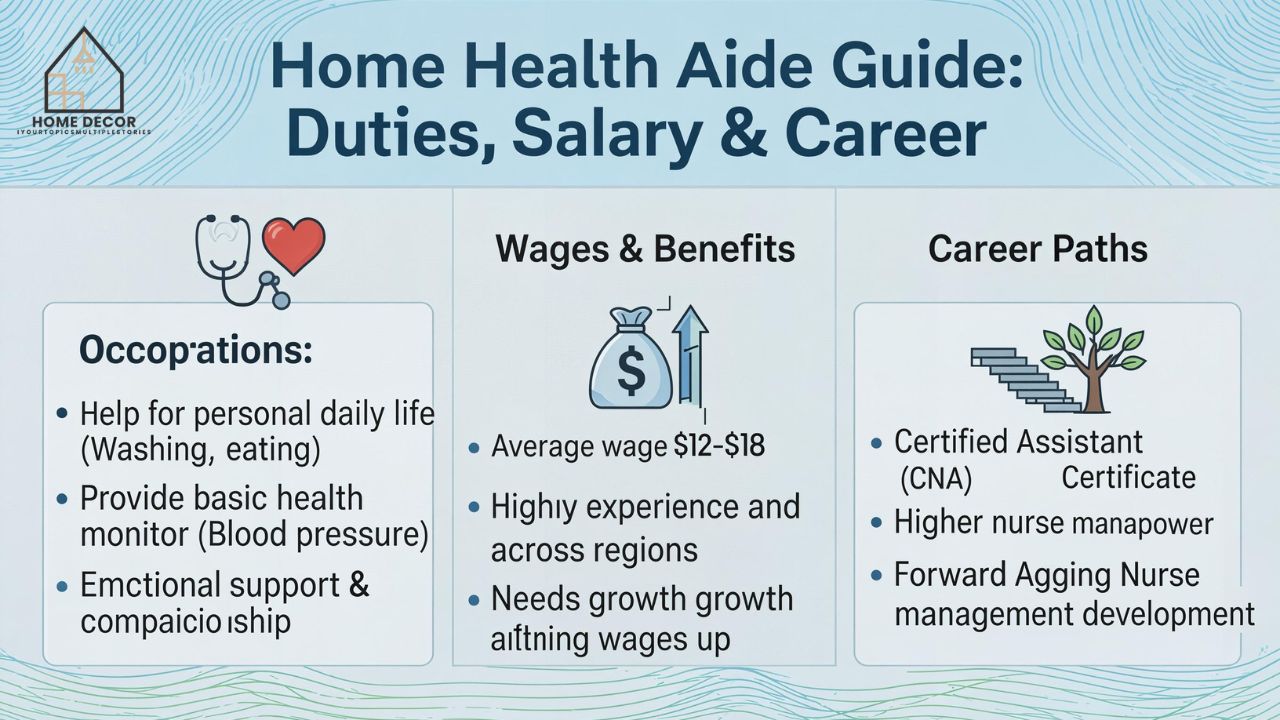
A home health aide assists patients with daily living activities such as:
- Bathing and grooming
- Dressing and mobility
- Meal preparation
- Medication reminders
- Light housekeeping
They may also monitor vital signs and report changes to healthcare professionals.
Key Responsibilities of a Home Health Aide
Being a home health aide goes far beyond simple assistance. It’s about improving quality of life.
Personal Care Assistance
This includes helping clients with:
- Hygiene routines
- Toileting
- Dressing
- Physical movement
Health Monitoring
While not nurses, aides often:
- Check pulse and temperature
- Observe physical or emotional changes
- Report concerns to supervisors
Household Support
Many clients rely on aides for:
- Cooking meals
- Cleaning living spaces
- Grocery shopping
Emotional Support
Loneliness is a real issue, especially among seniors. A home health aide often becomes a trusted companion, offering:
- Conversation
- Mental stimulation
- Emotional reassurance
Skills Required to Become a Home Health Aide
Not everyone is suited for this role—and that’s okay. It takes a unique mix of soft and practical skills.
Essential Skills
- Compassion and empathy
- Patience under pressure
- Strong communication
- Attention to detail
Physical Stamina
You’ll often be:
- Standing for long hours
- Assisting with mobility
- Handling physically demanding tasks
Problem-Solving Ability
Every client is different. A skilled home health aide knows how to adapt quickly.
Educational Requirements and Training
One of the most appealing aspects of becoming a home health aide is the relatively low barrier to entry.
Basic Requirements
- High school diploma (in most cases)
- On-the-job training
- Certification (depending on location)
Training Programs
Training typically includes:
- Basic healthcare knowledge
- First aid and CPR
- Patient safety procedures
Some programs also cover nutrition and infection control.
Certification
In many regions, certification is required if the aide works for agencies receiving government funding.
Home Health Aide Salary and Job Outlook
Let’s talk numbers—because they matter.
Average Salary
The salary of a home health aide varies based on experience and location. On average:
| Experience Level | Annual Salary |
|---|---|
| Entry-level | $20,000–$25,000 |
| Mid-level | $25,000–$35,000 |
| Experienced | $35,000–$45,000+ |
Job Growth
According to labor trends:
- The demand for home health aides is expected to grow significantly
- Aging populations are driving this demand
- Home care is often more affordable than hospital care
This makes it one of the fastest-growing healthcare roles globally.
Work Environment and Daily Life
A typical day isn’t spent in a clinic—it’s spent in someone’s home.
Work Settings
- Private homes
- Assisted living facilities
- Hospice care environments
Daily Routine
A day may include:
- Morning hygiene assistance
- Meal prep
- Medication reminders
- Light housekeeping
- Companionship
No two days are exactly alike—and that’s part of the appeal.
Career Growth Opportunities
Starting as a home health aide doesn’t mean staying there forever.
Advancement Paths
- Certified Nursing Assistant (CNA)
- Licensed Practical Nurse (LPN)
- Registered Nurse (RN)
Many professionals use this role as a stepping stone into broader healthcare careers.
Specialization
You can also specialize in:
- Dementia care
- Hospice care
- Pediatric home care
Personal Background and Career Journey
While a home health aide role doesn’t typically involve celebrity-level fame or net worth discussions, the personal journey behind this career is worth exploring.
Who Becomes a Home Health Aide?
People from all walks of life enter this field:
- Career changers seeking meaningful work
- Young professionals entering healthcare
- Individuals with caregiving experience
Career Journey
A typical path might look like:
- Completing basic training
- Gaining experience with clients
- Building trust and skills
- Advancing into specialized roles
Financial Insights
While not a high-paying job initially, many aides:
- Increase earnings with experience
- Take on private clients
- Work overtime or multiple shifts
Over time, this can create a stable and sustainable income.
Challenges and Rewards of Being a Home Health Aide
Let’s be honest—this job isn’t easy.
Challenges
- Emotional strain from patient decline
- Physical demands
- Irregular hours
Rewards
- Deep personal connections
- Making a real difference
- Flexible work opportunities
Many aides say the emotional rewards outweigh the difficulties.
FAQ
Frequently Asked Questions
What does a home health aide do daily?
A home health aide assists with personal care, household tasks, and basic health monitoring, while also providing companionship.
Do you need certification to become a home health aide?
In many cases, yes—especially if working with licensed agencies or government-funded programs.
How long does it take to become a home health aide?
Training can take a few weeks to a few months, depending on the program.
Is being a home health aide a good career?
Yes, especially if you value meaningful work and job stability in a growing field.
Can a home health aide administer medication?
Typically, they can only remind patients to take medication—not administer it unless specially trained.
What’s the difference between a CNA and a home health aide?
CNAs usually work in medical facilities, while home health aides provide care in patients’ homes.
Is the job physically demanding?
Yes, it often involves lifting, standing, and assisting with mobility.
Can you work independently as a home health aide?
Yes, many experienced aides take private clients outside agencies.
Conclusion
Choosing to become a home health aide isn’t just about finding a job—it’s about stepping into a role that genuinely impacts lives. From helping someone regain independence to simply being there during difficult moments, the work carries a level of purpose that’s hard to match.
If you’re looking for a career that blends compassion, stability, and growth potential, this path is worth serious consideration. It may not always be easy, but it will almost always be meaningful—and that’s something few careers can promise.