
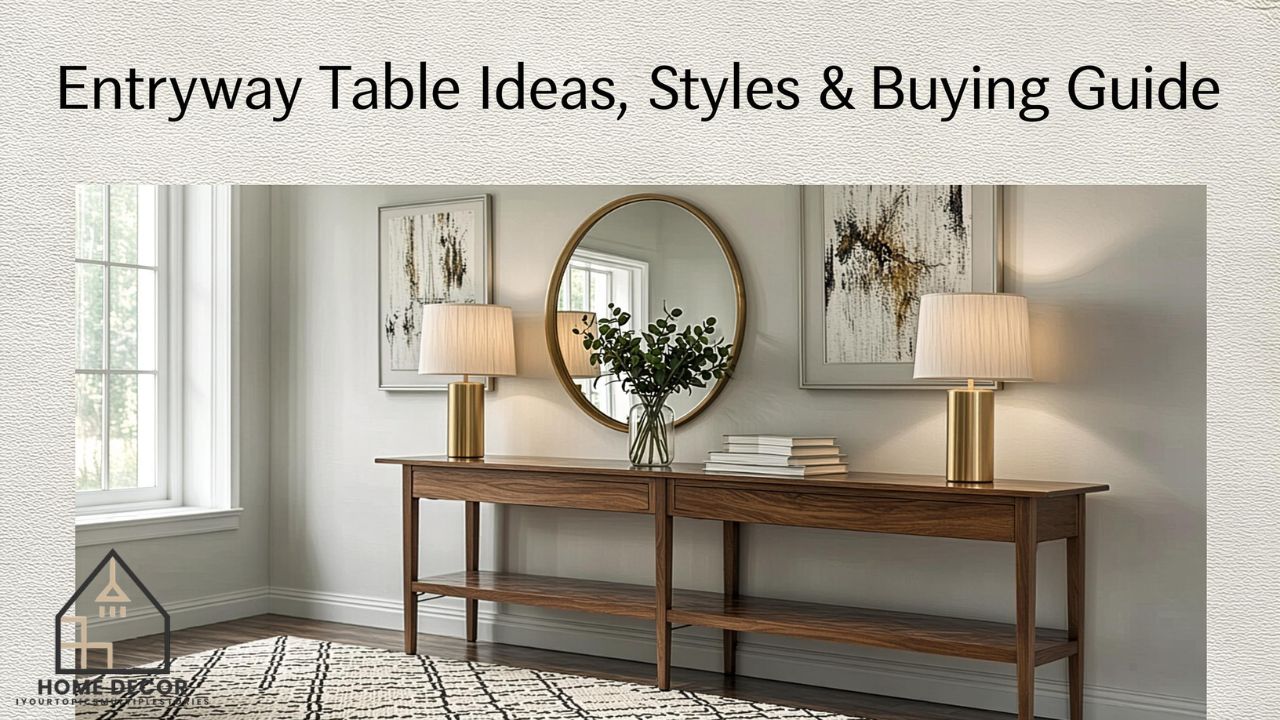
When someone steps into your home, what’s the first thing they see? Before the living room sofa, before the kitchen island, even before the wall art—it’s often the entryway table quietly setting the tone.
An entryway table might seem like a small detail, but in reality, it shapes first impressions, supports daily routines, and reflects your personality in subtle ways. It’s where keys land after a long day, where mail stacks up, where a vase of fresh flowers says, “You’re home.” And if you’ve ever walked into a cluttered entry versus a thoughtfully styled one, you know how powerful that difference feels.
In this guide, we’ll explore how to choose, style, and maximize an entryway table so it works beautifully for your space—no matter the size of your home.

What Is an Entryway Table?
An entryway table is a narrow, typically long table placed in a foyer, hallway, or near the main entrance of a home. It’s also commonly called a console table or hallway table. While it often serves decorative purposes, it also provides practical functionality—holding keys, mail, lighting, or storage baskets.
Key Characteristics
- Slim depth (usually 10–18 inches)
- Standard height between 28–34 inches
- Designed to fit against a wall
- Often paired with mirrors, lamps, or artwork
In essence, an entryway table blends utility and aesthetics. It’s one of those pieces that quietly works hard every single day.
Why an Entryway Table Matters More Than You Think
At first glance, it may seem like “just a table.” But psychologically, your entry space influences mood and organization.
1. First Impressions Count
According to interior design research, people form an impression of a space within seconds. A styled entry sets expectations—clean, welcoming, elegant, cozy, modern.
2. It Reduces Everyday Stress
Imagine never searching for your keys again because you have a designated tray on your entryway table. Small systems prevent daily friction.
3. It Anchors the Space
Hallways often feel transitional and empty. Adding furniture creates structure and intention.
In reality, this piece isn’t optional—it’s strategic.
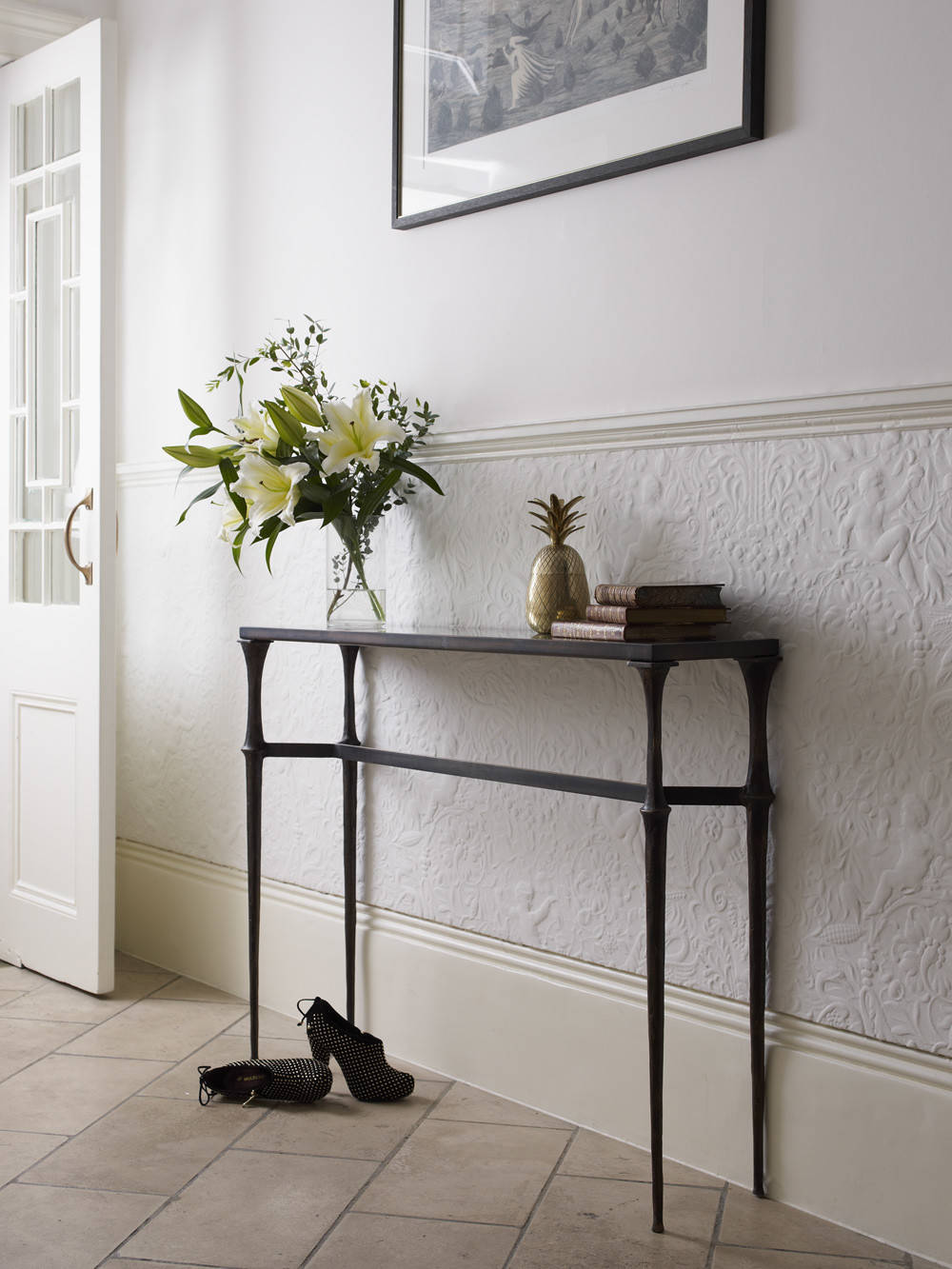
Types of Entryway Table Styles
Choosing a style depends on your home’s personality and architecture. Let’s explore popular design directions.
Modern Minimalist
- Clean lines
- Neutral finishes (white, black, matte wood)
- Metal legs
- Little to no ornamentation
Best for: Contemporary homes, apartments, urban interiors.
Rustic & Farmhouse
- Reclaimed wood
- Distressed finishes
- Chunky legs
- Warm tones
Best for: Cozy homes, country-inspired interiors.
Industrial
- Wood + metal combinations
- Dark finishes
- Raw materials
Best for: Loft-style spaces, exposed brick walls.
Traditional
- Carved legs
- Rich wood tones
- Drawer detailing
Best for: Classic architecture, formal homes.
Scandinavian
- Light oak or ash
- Tapered legs
- Airy, simple aesthetic
Best for: Small, bright spaces needing visual lightness.

How to Choose the Right Entryway Table for Your Space
Selecting the perfect entryway table isn’t just about looks. Measurements, proportion, and lifestyle matter.
Step 1: Measure Your Space
- Measure wall width.
- Measure depth of hallway clearance.
- Leave at least 30 inches of walking space.
Step 2: Determine Your Needs
Ask yourself:
- Do I need drawers?
- Do I want open shelving?
- Is this purely decorative?
Step 3: Match Proportion
A table too small looks awkward. Too large feels cramped. Ideally, it should span two-thirds to three-quarters of the wall width.
Entryway Table Dimensions & Placement Guide
Here’s a quick reference table:
| Space Type | Recommended Width | Recommended Depth | Height Range |
|---|---|---|---|
| Small Apartment | 30–36 inches | 10–12 inches | 28–30 in |
| Standard Hallway | 36–48 inches | 12–15 inches | 30–32 in |
| Large Foyer | 48–72 inches | 14–18 inches | 30–34 in |
Placement Tips:
- Center under a mirror.
- Align with wall art.
- Avoid blocking doors or vents.
Styling Your Entryway Table Like a Pro
Now comes the fun part—decor.

The Rule of Three
Group decor in odd numbers for balance:
- Lamp
- Vase
- Decorative object
Add Height Variation
Combine:
- Tall lamp
- Medium-height frame
- Low tray
Include Personal Touches
Family photos, travel souvenirs, seasonal décor—this makes your home feel lived-in.
Use Functional Decor
- Key tray
- Mail organizer
- Small bowl
- Catch-all basket underneath
Infographic Tip (Visual Guide)
Think of styling in three vertical layers:
- Wall (mirror/art)
- Tabletop décor
- Floor-level storage (baskets)
This layered approach creates depth.
Storage Solutions & Functional Upgrades
An entryway table can be more than decorative.
Drawer Models
Perfect for:
- Wallets
- Sunglasses
- Dog leashes
Shelved Options
Store:
- Shoes
- Baskets
- Decorative boxes
Add Hooks Above
Pair with wall hooks for coats and bags.
Smart Additions
- Charging station drawer
- Motion sensor lamp
- Smart home control panel
However, keep clutter controlled. Function should never overwhelm design.

Entryway Table for Small Spaces
Living in a compact apartment? You’re not alone. Urban homes are shrinking, and every inch counts.
Go Narrow
Look for depths under 12 inches.
Floating Console
Wall-mounted options save floor space.
Multi-Functional Pieces
A slim desk can double as an entryway table.
Mirrored Surfaces
Reflect light and make the area feel larger.
On the other hand, avoid heavy, bulky pieces—they visually shrink the room.
Materials & Durability Considerations
Not all materials perform the same.
Solid Wood
- Durable
- Timeless
- Can last decades
MDF
- Affordable
- Lightweight
- Less durable
Metal
- Strong
- Industrial appeal
- Easy to clean
Glass
- Elegant
- Modern
- Shows fingerprints easily
If you have kids or pets, durability matters more than trend.
Budget Guide: What Should You Spend?
Prices vary widely.
| Budget Level | Price Range | What to Expect |
|---|---|---|
| Budget | $80–$200 | MDF, basic styles |
| Mid-Range | $200–$600 | Solid wood, storage options |
| High-End | $600–$2000+ | Designer finishes, premium materials |
Invest where durability matters. A well-built piece can last 10–20 years.

Personal Design Inspiration & Real-Life Examples
Let me share a real scenario. A friend moved into a small city apartment. The hallway was narrow and lifeless. She added a slim oak entryway table, hung a round mirror above it, placed a ceramic lamp and a woven basket underneath.
The transformation? Immediate warmth. Guests commented. More importantly, she stopped misplacing keys.
Another example: In a suburban home with a large foyer, a dark wood entryway table anchored the space beneath a dramatic chandelier. Paired with oversized artwork, it created a luxurious feel.
Design doesn’t require a mansion—just intention.
Frequently Asked Questions
FAQs
What is the ideal height for an entryway table?
Most range between 28–34 inches tall. It should align comfortably with standard wall art and mirror placement.
How many times should I style my entryway table per year?
Seasonal updates (3–4 times annually) keep the space fresh—think fall leaves, winter greenery, spring florals.
Can an entryway table work in a narrow hallway?
Yes. Choose a depth under 12 inches and ensure at least 30 inches of walking clearance.
Should an entryway table match other furniture?
Not necessarily. It should complement, not duplicate. Contrast can add visual interest.
Is storage necessary in an entryway table?
It depends on lifestyle. Families benefit from drawers and shelves, while minimalist homes may prefer clean lines.
What decor looks best on an entryway table?
Mirrors, lamps, trays, vases, artwork, and layered accessories work beautifully together.
Can I use a desk as an entryway table?
Yes, especially in small spaces. Slim desks function well if proportions fit.
How wide should an entryway table be?
Ideally, two-thirds to three-quarters the width of the wall behind it.
Conclusion
An entryway table might seem like a small piece of furniture, but its impact is surprisingly powerful. It welcomes guests, organizes essentials, and quietly expresses your design taste.
When chosen thoughtfully and styled with intention, it becomes more than furniture—it becomes a daily ritual space. The place where you pause before heading out. The place where you drop your keys and exhale.
If you’ve been overlooking your entryway, now’s the time to rethink it. Because sometimes, the smallest spaces tell the biggest story.