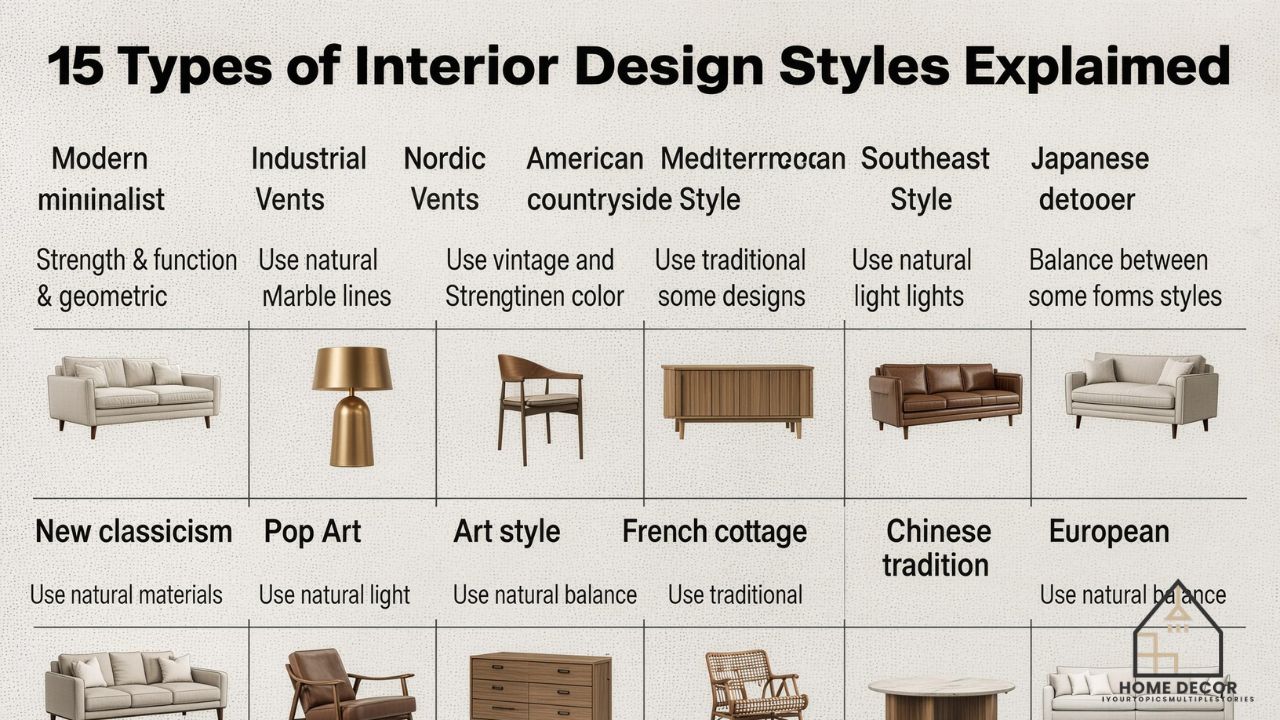
Interior design is more than choosing a sofa or painting a wall—it’s about creating a space that reflects who you are. When people start exploring the different types of interior design styles, they often feel both excited and overwhelmed. There are so many beautiful options, each with its own personality and mood.
Understanding the various <strong>types of interior design styles</strong> helps you avoid costly mistakes, design confusion, and impulse purchases. Whether you’re renovating an apartment, building a home, or simply refreshing a single room, knowing your style makes every decision easier—from flooring to lighting to accessories.
In reality, design is deeply emotional. The colors, textures, and layouts around us shape how we feel every day. Some styles feel calm and airy. Others are bold and dramatic. Some celebrate tradition; others embrace innovation. This guide will walk you through the most influential styles, helping you identify which one feels like home.

Modern Interior Design
Modern interior design traces its roots back to the early 20th century, influenced by the Bauhaus movement and modernist architecture. It emphasizes simplicity, function, and clean lines.
Key Characteristics
- Neutral color palettes (white, beige, gray)
- Sleek furniture with smooth surfaces
- Minimal ornamentation
- Open floor plans
- Natural materials like wood and leather
Modern spaces often feel calm and organized. However, without warmth, they can appear cold. That’s why layering textures—like a wool rug or linen curtains—is essential.
Contemporary Interior Design
Many people confuse modern and contemporary styles. However, contemporary design refers to what’s trending right now.
What Makes It Different?
- Fluid, curved furniture
- Statement lighting
- Bold accent colors
- Mixed materials (metal + glass + wood)
Contemporary spaces evolve with time. What feels contemporary today may look outdated in a decade. That flexibility makes it exciting but also unpredictable.

Minimalist Interior Design
Minimalism is not about emptiness—it’s about intentional living. Inspired by Japanese design philosophy, minimalist interiors focus on clarity and purpose.
Core Principles
- “Less is more”
- Neutral tones
- Functional furniture
- Clean surfaces
- Hidden storage
Studies show clutter increases stress levels. Minimalist environments, on the other hand, promote calmness and mental clarity. If you value simplicity and order, this style feels liberating.
Scandinavian Interior Design
Scandinavian design combines minimalism with warmth. Originating from Nordic countries, it embraces natural light and coziness.
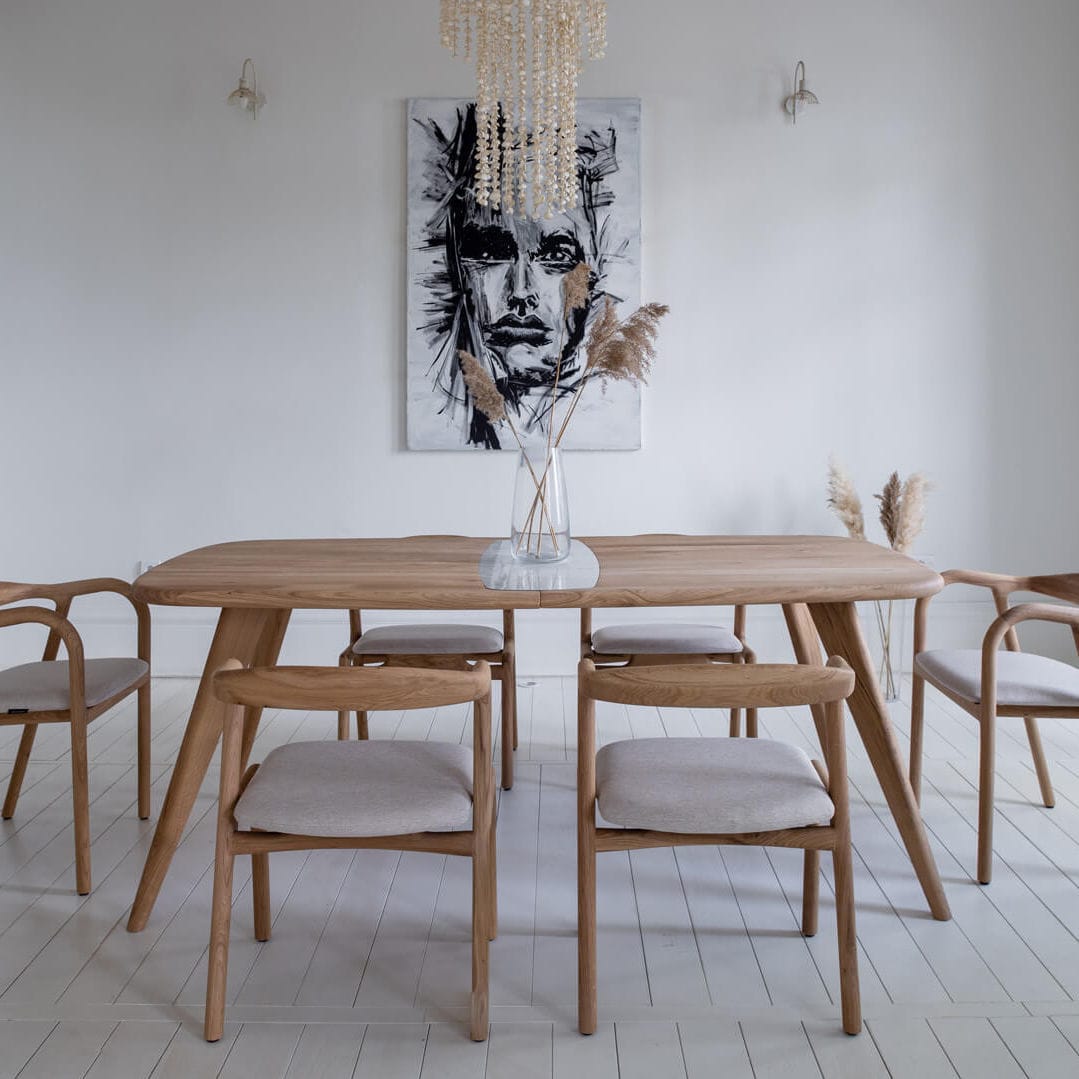
Signature Elements
- Light wood tones
- White walls
- Cozy textiles (throws, sheepskin)
- Functional furniture
- Hygge atmosphere
In countries with long winters, creating bright interiors isn’t optional—it’s essential. That’s why Scandinavian spaces feel warm despite their simplicity.
Industrial Interior Design
Industrial design emerged from converted warehouses and urban lofts. It celebrates raw materials and architectural honesty.
Recognizable Features
- Exposed brick walls
- Metal beams
- Concrete floors
- Edison bulb lighting
- Open ceilings
It’s bold, edgy, and slightly rebellious. On the other hand, too much raw material can make a space feel unfinished. Balance is key.

Traditional Interior Design
Traditional interiors draw inspiration from 18th and 19th-century European decor.
Hallmarks of Traditional Style
- Ornate wood furniture
- Symmetry
- Rich fabrics (velvet, silk)
- Detailed moldings
- Classic color palettes
Traditional design feels timeless and elegant. However, it requires careful curation to avoid looking dated.
Transitional Interior Design
Transitional design blends modern simplicity with traditional warmth.
Why It’s Popular
- Neutral foundation
- Mix of curved and straight lines
- Comfortable upholstery
- Balanced proportions
Many homeowners prefer transitional because it feels safe, adaptable, and welcoming.
Bohemian Interior Design
Bohemian—or “boho”—style is expressive and artistic.

Defining Traits
- Layered textiles
- Global patterns
- Plants
- Vintage finds
- Earthy tones
There are virtually no strict rules here. It’s ideal for creative personalities who dislike rigid structure.
Farmhouse Interior Design
Farmhouse style celebrates comfort and rural charm.
Common Features
- Shiplap walls
- Rustic wood
- Neutral color schemes
- Vintage-inspired accessories
Modern farmhouse adds contemporary touches like matte black fixtures and minimalist lighting.
Mid-Century Modern Design
Inspired by the 1950s and 1960s, this style emphasizes functionality and bold shapes.
Identifying Details
- Tapered legs
- Geometric patterns
- Walnut finishes
- Bright accent colors (mustard, teal)
It feels retro yet surprisingly fresh.
Luxury Interior Design
Luxury design focuses on craftsmanship and premium materials.
Luxury Hallmarks
- Marble surfaces
- Custom furniture
- Statement chandeliers
- Rich textures
- Attention to detail
Luxury doesn’t always mean excessive decoration. In reality, true luxury often lies in subtle refinement.
Eclectic Interior Design
Eclectic design blends multiple styles into one cohesive space.
How It Works
- Contrasting patterns
- Varied textures
- Curated decor
- Bold art pieces
It requires a strong eye for balance. Without harmony, eclectic can quickly turn chaotic.

How to Choose Among Types of Interior Design Styles
Choosing between different types of interior design styles can feel confusing. Here’s a practical approach:
1. Assess Your Lifestyle
Do you entertain frequently? Do you have children or pets? Practical needs matter.
2. Identify Emotional Response
Which spaces make you feel calm? Energized? Inspired?
3. Create a Mood Board
Collect images from magazines or Pinterest.
4. Start Small
Experiment with one room before committing.
Comparison Table
| Style | Best For | Color Palette | Mood |
|---|---|---|---|
| Modern | Clean aesthetics | Neutral | Calm |
| Scandinavian | Cozy minimalists | White + Wood | Warm |
| Industrial | Urban lofts | Dark neutrals | Edgy |
| Bohemian | Creative souls | Earthy + Vibrant | Free-spirited |
| Traditional | Classic homes | Rich tones | Elegant |
Frequently Asked Questions
What are the most popular types of interior design styles today?
Modern, Scandinavian, and contemporary designs currently dominate global trends.
How many types of interior design styles exist?
There are dozens, including regional and niche variations, but about 10–20 major styles are widely recognized.
Can I mix different types of interior design styles?
Yes. Transitional and eclectic designs are based on blending elements successfully.
Which style is best for small apartments?
Minimalist and Scandinavian styles work well due to their emphasis on light and simplicity.
Are interior design styles expensive to implement?
It depends on materials and scale. Minimalist can be affordable, while luxury design often requires a larger budget.
What interior style increases home value?
Modern and transitional styles generally appeal to the widest market.
How do I know which style suits my personality?
Reflect on your wardrobe, travel experiences, and favorite spaces. Your taste often appears consistently across areas of life.
Conclusion
Exploring the different types of interior design styles is like discovering new languages of expression. Each style tells a story—about history, culture, personality, and lifestyle. Some whisper tranquility. Others shout creativity. Some feel grounded in tradition, while others boldly face the future.
Ultimately, the right design isn’t about trends—it’s about alignment. When your space reflects who you truly are, every day feels a little more comfortable, a little more inspiring, and a lot more personal.